


Selling Surplus Cafeteria and Maintenance Equipment
Posted On: August 3, 2026 by Backes Auctioneers in: Food service equipment
Back-to-school facility work often starts with a practical goal: updating a kitchen, reorganizing storage, cleaning out a maintenance area, or preparing a building for new use. Once that work begins, schools often find equipment that no longer fits the current layout, menu, staffing model, or maintenance plan.
A cafeteria remodel may leave behind ovens, sinks, prep tables, carts, or refrigeration. A maintenance department cleanout may uncover shop tools, shelving, lawn equipment, lifts, pallet racking, or surplus inventory that has been sitting out of regular use. Campus consolidations, building closures, and department moves can create the same issue on an even larger scale.
Selling surplus school equipment through auction can help districts clear space, recover value, and keep usable assets moving to buyers who are actively looking for used commercial, cafeteria, and maintenance equipment. For schools that have not worked through a school surplus auction before, planning ahead makes the process easier to manage.
Quick Navigation
- Why Facility Upgrades Create Surplus Equipment
- Cafeteria Equipment Schools Can Sell at Auction
- Maintenance and Facility Equipment That May Hold Value
- Why Timing Matters
- How an Auction Helps
- Preparing Surplus Equipment for Auction
- FAQs
Why Facility Upgrades Create Surplus Equipment
Facility upgrades often change how a school uses its space. A cafeteria may move from one serving setup to another. A maintenance department may consolidate tools from multiple buildings. A storage room may need to be cleared for classroom, athletic, or administrative use.
In those situations, usable equipment can quickly become surplus. The items may still have value, but they no longer serve the school’s current needs. Holding onto them can create other problems: less storage space, harder access, more clutter, and the risk that equipment loses value while sitting unused.
Selling surplus school equipment gives districts a more organized way to handle those assets. Rather than moving items from one storage area to another, schools can evaluate what is still useful, what should be sold, and what information buyers need before bidding.
Schools should also follow their internal district procedures and applicable local requirements for surplus property approval before selling. Auction planning works best when those internal steps and the physical asset review happen early in the process.
Cafeteria Equipment Schools Can Sell at Auction
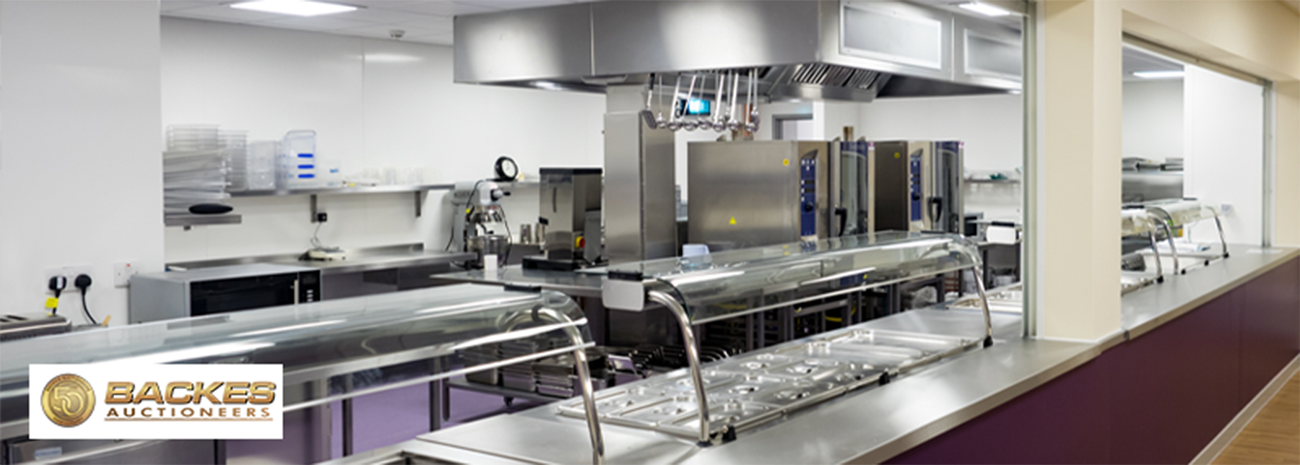
Schools can often sell commercial kitchen and cafeteria equipment such as ovens, mixers, refrigeration, prep tables, serving lines, carts, sinks, shelving, dish machines, and stainless equipment.
Surplus cafeteria equipment tends to attract buyers when it is organized, accessible, and described clearly. Restaurants, caterers, churches, small food service operators, other institutions, and buyers outfitting second-use spaces may all look at a used cafeteria equipment auction for practical, durable items.
Examples of school cafeteria equipment that may hold auction value include:
- Convection ovens, ranges, steamers, warmers, fryers, and holding cabinets
- Commercial mixers, slicers, food processors, prep tables, and stainless workstations
- Reach-in coolers, freezers, walk-in components, ice machines, and display refrigeration
- Serving lines, tray slides, sneeze guards, utility carts, dish tables, sinks, and dish machines
- Wire shelving, storage racks, cafeteria tables, smallwares, and grouped kitchen lots
Condition and completeness matter. A working commercial mixer with a model number, known voltage, and attachments is easier for buyers to evaluate than a mixer pushed into a corner with no information. The same is true for refrigeration, ovens, stainless tables, and serving equipment.
If a cafeteria remodel is underway, it may be worth speaking with an auction professional before equipment is disconnected, moved, or placed in long-term storage. Layout, access, utilities, and removal timing can all affect how assets are photographed, described, grouped, and sold.
Related Reading: The Many Types of Food Service Operations that Use Auctions
Maintenance and Facility Equipment That May Hold Value
Maintenance departments may have auctionable assets such as shop tools, pallet racking, shelving, lifts, lawn equipment, snow removal equipment, carts, workbenches, storage equipment, and surplus inventory.
A school maintenance equipment auction does not have to involve only large machinery. Smaller assets can be valuable when grouped correctly and presented to buyers who understand facility work. Grounds equipment, shop supplies, cabinets, hand tools, power tools, and maintenance inventory may all fit into a broader facility equipment auction.
Schools may want to review areas such as:
- Maintenance shops and storage rooms
- Groundskeeping buildings
- Bus garages or vehicle service areas
- Custodial storage spaces
- Former classrooms, labs, or vocational areas used for storage
- Closed buildings or wings after consolidation
Auction buyers often look for practical equipment they can put to work. That may include welders, air compressors, ladders, carts, benches, lockers, pallet racking, shelving, snow blowers, mowers, lifts, pipe threaders, shop vacs, and grouped lots of supplies.
The key is not to overlook ordinary assets. A single item may not seem significant on its own, but a well-organized group of maintenance tools, shelving, and facility supplies can still bring buyer interest.
Why Timing Matters Before the School Year Gets Busy
School districts should plan a surplus equipment auction as early as possible during a facility upgrade, cleanout, closure, or consolidation. Once students and staff return, access, scheduling, removal, and organization can become more difficult.
Timing affects more than the sale date. It can shape the quality of photos, the accuracy of descriptions, the way lots are grouped, and the removal plan for buyers. If equipment has already been moved into crowded storage, it may be harder to inspect, identify, or safely remove.
Earlier planning can also help schools avoid double-handling equipment. Instead of paying staff or contractors to move items into storage, the district may be able to plan around the auction process from the beginning. That can make a difference when dealing with large kitchen equipment, pallet racking, refrigeration, or bulky maintenance assets.
The school calendar matters, too. Summer projects, staff availability, board approvals, contractor schedules, and student return dates all affect how much time a district has to prepare. The more complex the assets or the building access, the more important that timeline becomes.
How an Auction Helps Schools Manage Surplus Assets
A school surplus auction is a structured sale process that helps schools sell equipment they no longer need to interested buyers through competitive bidding.
For districts and institutions, auctions can be useful because they bring many asset categories into one organized process. Cafeteria equipment, maintenance tools, shelving, shop equipment, grounds equipment, storage items, and institutional surplus can often be reviewed together instead of handled through separate informal sales.
Auctions can also improve visibility. Buyers who follow commercial, food service, industrial, construction, and institutional auctions are often already looking for specific types of equipment. That audience may understand the value of used commercial kitchen equipment, maintenance tools, facility equipment, and grouped surplus lots.
At Backes, we work with commercial, food service, institutional, industrial, construction, automotive, agricultural, and maintenance-related assets. Our team has been providing professional auction services for more than 40 years, with experience across restaurants, bakeries, bars, manufacturing, construction, agriculture, and many other commercial asset categories.
For schools, the goal is practical: create a clear process, present the assets accurately, reach interested buyers, and plan for removal in a way that works with the facility schedule.
Preparing Surplus School Equipment for Auction
Good preparation helps buyers understand what is being sold and helps the school avoid unnecessary confusion during pickup and removal.
Start by identifying what is no longer needed. This may involve walking through kitchens, maintenance areas, storage rooms, garages, closed classrooms, and outbuildings with department leaders. Food service directors, facilities directors, custodial supervisors, and business office staff may each know different details about the equipment.
As items are reviewed, collect the information buyers typically look for:
- Brand, model, serial number, dimensions, and quantity
- Working status, known issues, missing parts, or maintenance notes
- Utility requirements, such as gas, electric, phase, voltage, or plumbing connections
- Location within the building and any access concerns
- Loading needs, elevator access, dock availability, and preferred removal windows
Keep similar assets grouped by department or location when possible. Cafeteria equipment should be easy to distinguish from custodial supplies, maintenance tools, or general institutional surplus. That organization can help with lotting, descriptions, photos, and buyer inspections.
It is also wise to avoid unnecessary moving before speaking with an auction professional. Moving heavy equipment too early can create extra labor, damage risk, or access issues. In many cases, it is better to review the assets in place before deciding how they should be grouped and removed.
Schools should also factor in district procedures for declaring surplus property, board approvals, procurement policies, and applicable local requirements. An auction company can help with the selling process, but each school district should follow its own internal rules for asset disposal.
Related Reading: Bundle vs. Sell Individually: How to Choose the Best Lot Strategy
Talk With Backes Before Surplus Equipment Gets Stored Away
If your school is preparing for a cafeteria remodel, facility upgrade, campus cleanout, or building closure, it helps to talk before the surplus equipment gets buried in storage.
We can help review what may be auctionable, how items may be grouped, what information buyers will need, and how the sale timeline could work around school operations. Early conversations are especially useful for commercial kitchen equipment, refrigeration, pallet racking, lifts, shop tools, lawn equipment, and larger facility assets that require careful removal planning.
You can learn more about our commercial auction services on the Backes Auctioneers homepage, review current opportunities on our upcoming auctions page, or start the process through our book your own auction page. Schools and institutions can also explore our business owner auction services to better understand how we approach asset sales.
If you have questions about selling surplus school equipment, contact us through our contact page or call our team.
Frequently Asked Questions
What school cafeteria equipment can be sold at auction?
Schools can often sell ovens, mixers, prep tables, refrigeration, serving lines, dish machines, sinks, shelving, carts, and stainless equipment. Buyers are generally looking for functional commercial kitchen equipment with clear descriptions and accessible pickup details. Condition, model information, and known issues should be documented whenever possible.
Can schools sell maintenance equipment and shop tools at auction?
Yes. Maintenance tools, shop equipment, pallet racking, shelving, lifts, lawn equipment, snow removal equipment, carts, workbenches, and surplus facility inventory may all be suitable for auction. Smaller items can also be grouped into lots when that makes more sense for buyers.
When should a school district contact an auction company?
A school district should contact an auction company as soon as it knows equipment may become surplus. Early planning helps with photos, lot organization, descriptions, access, removal windows, and overall timing. It can also help schools avoid moving equipment into storage before the best selling plan is in place.
Is an auction a good option for a school facility cleanout?
An auction can be a practical option when a school needs to sell multiple types of assets from a cleanout, remodel, closure, or consolidation. It creates one organized process for cafeteria equipment, maintenance assets, shelving, tools, and institutional surplus. Schools should still follow internal procedures for approving surplus property before selling.
What information should schools gather before selling surplus equipment?
Schools should gather brand names, model numbers, serial numbers, dimensions, quantities, condition notes, photos, and known issues. It is also helpful to note where the items are located, how buyers can access them, and what loading or removal limitations may exist. That information helps bidders make more informed decisions.

0 comments