


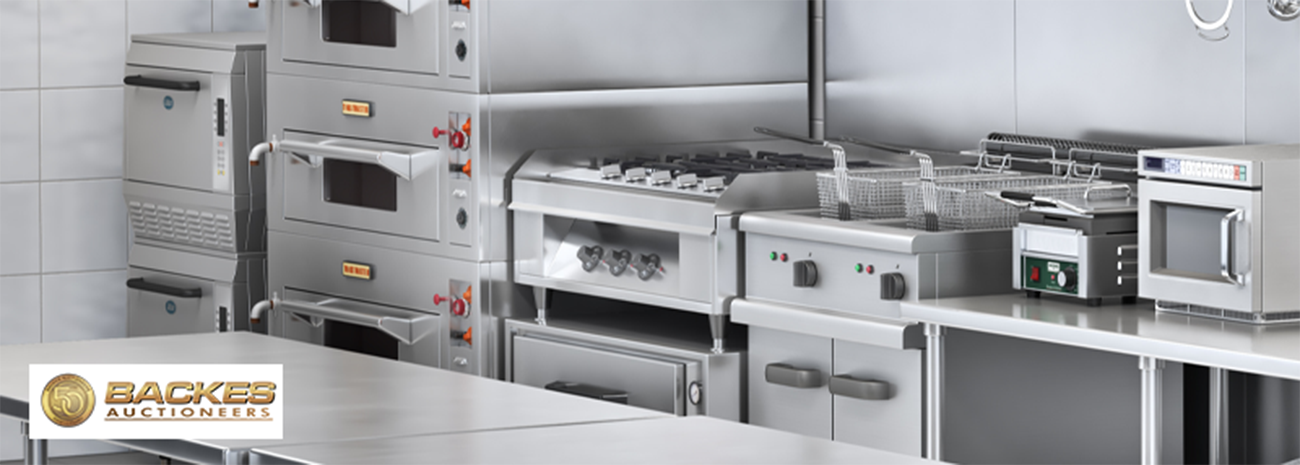
When you’re preparing to liquidate equipment from a restaurant, bakery, grocery store, brewery, or commercial kitchen, one question is sure to come up quickly: “Should these items be bundled together or sold individually?”
The way you structure your lots can significantly affect bidder interest, auction momentum, and your final return. Choosing the right strategy doesn’t have to be complicated. With a little planning, and an understanding of how buyers make decisions, you can position each item to attract strong, confident bidding.
Start With One Key Question: “What Do Buyers Actually Want?”
Food‑service buyers come to auction with specific needs. Some arrive looking for a single high‑value piece, like a convection oven or walk‑in cooler. Others are outfitting a full kitchen and want efficiency, not a long list of individual bids.
Understanding typical buyer behavior helps you decide where bundling adds value and where it could be turning bidders away.
Signs an Item Should Stand Alone
- It’s a high‑demand piece with broad appeal (think mixers, fryers, prep tables, etc.).
- Buyers routinely expect to purchase it individually.
- It’s newer, well‑maintained, or from a premium brand.
- It has strong resale potential beyond your local market.
These items tend to perform best on their own because standalone bidding encourages competition and often leads to higher returns.
Signs an Item May Work Better in a Bundle
- It’s one of several related pieces (flatware sets, smallwares, matching seating).
- It has low individual value but strong combined value.
- It’s part of a specialty setup that makes more sense together, like bakery tools, barware, or deli equipment.
- Selling individually would create too many low‑value listings that drain attention from more important pieces.
Bundle With Purpose, Not Convenience
A strong bundled lot makes buyers feel like they’re getting a ready‑to‑use set, not a random assortment just thrown together to make a quick buck. Thoughtful grouping is one of the most reliable ways to increase total return.
Best Practices for Effective Bundling
- Group logically: Keep similar items like cookware, tableware, bar supplies, or matching refrigeration components together.
- Bundle smallwares smartly: Pots, pans, utensils, containers, and trays perform well in mixed kitchen bundles.
- Combine items that complete a task: Pair warming units with pans, or mixers with attachments.
- Avoid oversized bundles: Too many items can narrow your buyer pool if bidders only want a portion.
Bundling isn't about clearing space quickly; it’s about helping buyers clearly see the value in what you’re trying to move.
When Bundling Hurts More Than It Helps
Not every group makes sense. In some cases, bundling items that don’t make sense together can actually reduce, not encourage, bidder participation.
Avoid bundling when:
- It forces buyers to purchase items they don’t want.
- It limits competition for your most desirable pieces.
- The lot becomes difficult or expensive to remove.
- The condition varies widely among items.
Think of your auction catalog like a storefront: the more approachable each lot feels, the more interest you attract.
Use Bundling to Drive Auction Momentum
A well‑bundled lot can serve as an anchor, drawing buyers into your auction and encouraging them to explore the rest of the catalog. For example, a “starter kitchen” bundle — equipment, prep tools, shelving, and storage — can appeal to new restaurant owners or food truck operators. Once engaged, those same bidders often stay active on other listings.
This strategy can increase total participation and improve results for the entire sale.
Let High‑Value Pieces Shine on Their Own
Core kitchen equipment pieces like ranges, refrigeration, hoods, dishwashers, and mixers are typically most profitable when sold individually. These items attract experienced buyers who know exactly what they’re looking for and are prepared to bid competitively.
Listing them separately:
- Creates more bidding activity
- Generates stronger final prices
- Gives each item the visibility it deserves
- Draws more serious buyers to your auction overall
Think About Removal and Logistics
A solid food service industry auction strategy is less about selling items and more about making the pickup process smoother for everyone. Before deciding how to lot items, ask:
- Will a buyer be able to move all bundled items safely in one trip?
- Are there installation or electrical considerations that make certain items better sold alone?
- Is it more efficient to bundle smaller pieces so pickup coordination is easier?
Good logistics planning leads to better buyer satisfaction and encourages repeat participation.
Practical Examples for Food‑Service Sellers
Here are a few scenarios that illustrate smart lot decisions:
Example 1: Bakery Liquidation
Bundle: Sheet pans, cooling racks, utensils, storage bins.
Sell Individually: Planetary mixer, convection oven, proofing cabinet.
Example 2: Bar or Brewery
Bundle: Glassware sets, small taps, bar tools, shelving.
Sell Individually: Keg coolers, refrigeration, stainless prep lines.
Example 3: Grocery or Convenience Store
Bundle: Baskets, signage, small countertop appliances.
Sell Individually: Freezers, deli slicers, refrigerated displays.
These combinations help buyers quickly evaluate your catalog and make confident decisions.
Solid Structure Means Good Returns
Choosing whether to bundle or sell individually is one of the most important steps in preparing your auction. The right strategy depends on condition, demand, item type, and what will make the listing most attractive to the buyers who need your equipment.
If you’re planning a liquidation, remodel, or closure, Backes Auctioneers can help you structure your catalog for maximum return. Our team knows how to position your inventory so it performs well, lot by lot, and auction by auction.
Ready to plan your sale? Our experts are here to guide you every step of the way.

0 comments