


How Agricultural Operations Use Auctions to Rotate Equipment
Posted On: June 1, 2026 by Backes Auctioneers in: Agriculture Farm Industry
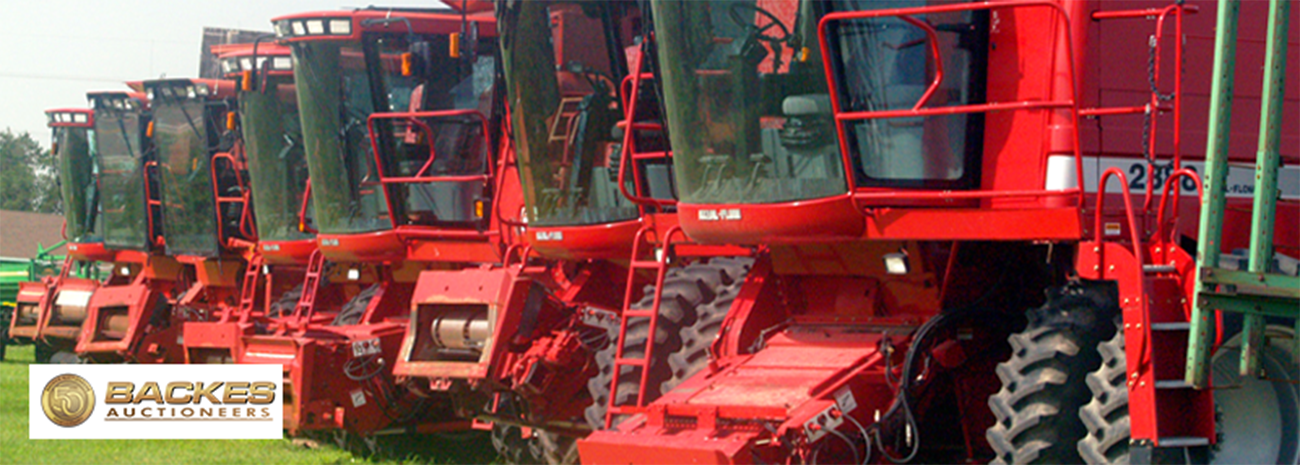
Farm equipment has a way of fading into the background as new technology and new models hit the market, making the old versions obsolete. A tractor that once ran hard through harvest now only sees occasional use. A combine with outdated technology still works, but it no longer fits the operation. A backup planter sits in a shed “just in case,” even though it hasn’t moved in two seasons.
None of these machines feel urgent. They’re paid for. They still start. They still technically work. Over time, though, that quiet equipment ties up capital, takes up space, and limits your operation’s flexibility.
For many agricultural operations, auctions play a practical role in solving this problem. Not as a one‑time exit strategy, but as a structured way to rotate equipment. Smart decision-makers are using auctions as a means of moving out assets that no longer fit, while recovering value that can be redeployed elsewhere in the business.
What follows is a closer look at how auctions fit into equipment rotation, why timing and planning matter, and how farm operators use auctions to protect — and often improve — the return they’ve already made on their equipment investments.
Equipment Rotation Is a Business Decision, not a Distress Move
In agriculture, equipment decisions often get put off out of habit. Machines stay longer than they should because replacing them feels expensive, inconvenient, or disruptive. Auctions are sometimes associated with downsizing or hardship, which keeps them off the table when things are going well.
That mental connection (selling equipment = dire financial straits) simply isn’t true. In practice, many successful farms use auctions deliberately while the equipment still has market relevance.
Equipment rotation is about alignment. When a machine’s role in the operation no longer matches its value on the balance sheet, it becomes a candidate for change. This happens for several reasons:
- Acreage increases or decreases
- Crop mixes shift
- Technology expectations change
- Labor availability shifts
- Service costs outpace usefulness
Auctions provide a clear exit path for equipment that still holds value despite no longer fitting your day‑to‑day needs.
How Farms Use Auctions to Support Cash Flow
Equipment ties up more than purchase dollars. It also carries indirect costs: maintenance labor, parts inventory, repairs, and opportunity cost.
When an operation converts unused or mismatched equipment through auction, the proceeds often serve specific business purposes:
- Partial funding for new or different equipment
- Capital improvements elsewhere on the farm
- Reduction of operating debt
- Seasonal cash flow smoothing
The key is intention. Farms that see the best returns plan auctions around broader financial goals rather than treating them as afterthoughts.
Where Auctions Fit in the Equipment Life Cycle
Farm equipment doesn’t lose value all at once. Instead, it declines in stages. That decline is often tied to usage hours, model updates, or compatibility with newer systems.
Operators who use auctions effectively understand this curve and plan accordingly.
Early Exit: Selling While Demand Still Exists
Some newer equipment performs best at auction before it’s fully depreciated from a tax standpoint. Late‑model tractors, self‑propelled sprayers, precision‑ready implements, and specialty attachments often draw strong bidder interest when they’re:
- Well‑maintained
- Clearly documented
- Relevant to current farming practices
Selling at this stage allows operators to recover a meaningful portion of their investment and shift that capital toward equipment that better fits their farm’s current demands.
Mid‑Life Rotation: Moving Out Mismatched Assets
This is the most common auction scenario.
A machine works, but not efficiently enough to justify keeping it. It may be oversized, underutilized, or redundant after a change in operation structure. Auctions help farms:
- Convert idle or lightly used equipment into working capital
- Free up storage and maintenance capacity
- Reduce complexity in the fleet
Late‑Stage Sales: Clearing Space and Costs
Even older equipment can make sense at auction when the alternative is continued storage, insurance, upkeep, or distraction. While returns are smaller, auctions provide clarity in the form of a defined sale date, a clean transfer, and no prolonged private‑sale negotiations.
How Auctions Attract the Right Buyers for Farm Equipment
Agricultural equipment markets are fragmented. What no longer fits one operation may be exactly what another farmer, contractor, or specialty producer is looking for.
Auctions bring those buyers together.
Rather than relying on limited local demand, Backes Auctioneers can expose that equipment to regional or national buyers who are actively searching for specific models, configurations, or price points. This competition often produces stronger results than one‑off private listings.
Key advantages include:
- Market visibility: Buyers already trust the auction environment.
- Price discovery: Competitive bidding determines value in real time.
- Defined timeline: No open‑ended listing period or drawn‑out negotiations.
For sellers, that structure replaces guesswork with outcomes.
Preparing Equipment for Auction: Practical Steps That Matter
Strong auction results rarely happen by accident. Preparation plays a direct role in bidder confidence and bidding behavior.
For agricultural equipment, several factors consistently influence performance.
Documentation and Transparency
Buyers expect details. Clear information reduces hesitation and increases competitive bidding. Helpful documentation includes:
- Model and serial numbers
- Hours or acreage estimates
- Service and maintenance records
- Known issues or limitations
Disclosing condition isn’t a weakness. It establishes trust and encourages serious bidding.
Presentation and Condition
Equipment doesn’t need to be cosmetically perfect, but it should be honest and functional. Simple steps that matter:
- Cleaning heavy dirt and debris
- Securing loose parts
- Replacing minor, inexpensive components
- Grouping attachments or accessories with the primary machine
These steps signal care and professionalism, which bidders respond to.
Timing the Sale
Agricultural demand fluctuates with seasons, fuel prices, and commodity markets. While no timing guarantees top dollar, experienced auctioneers help sellers align inventory with periods of stronger buyer activity.
Auctions vs. Trade‑Ins
Trade‑ins offer convenience, but that convenience carries a cost. Trade values are often conservative, reflecting dealer risk and resale overhead. Auctions separate the sale from the purchase decision. This approach allows operators to:
- Test real market demand
- Maintain leverage when purchasing replacement equipment
- Avoid bundling decisions that mask true values
For some operations, the transparency of auctions clarifies what equipment is truly worth and informs future buying decisions.
Equipment That Performs Well at Agricultural Auctions
While results vary, certain categories consistently attract interest:
- Row‑crop tractors
- Combines and headers
- Tillage equipment
- Sprayers and spreaders
- Grain handling systems
- Specialty implements tied to regional crops
Even niche equipment can perform well when marketed to the right audience.
Common Missteps That Reduce Auction Returns
Some issues repeat across underperforming sales:
- Waiting until equipment is no longer functional
- Selling without preparation or service documentation
- Poor lot grouping or incomplete listings
- Unrealistic expectations based on past markets
Working with an auctioneer who understands agricultural equipment helps avoid these pitfalls and align expectations with market realities.
Related: Selling Idle Equipment Before It Loses Value
Planning Equipment Rotation as an Ongoing Process
Auctions are most effective when they’re part of a broader equipment strategy.
Healthy agricultural operations review their fleet annually, asking straightforward questions:
- Which machines are underutilized?
- Which no longer match our current scale?
- Which assets have strong resale demand today?
- Which upcoming purchases could be partially funded by sales?
This approach turns auctions into a planning tool rather than a reaction.
Frequently Asked Questions
When is the best time to sell farm equipment at auction?
Timing depends on the type of equipment, regional demand, and buyer activity. Late‑model equipment often performs best when demand is active and before newer iterations dilute interest. An experienced auctioneer can help assess timing based on current market conditions.
Is auctioning equipment better than selling it privately?
Auctions provide exposure, competitive bidding, and a fixed sale date. Private sales may take longer and limit buyer reach. The better option depends on the equipment, urgency, and desired outcome.
How much preparation is required before an auction?
Preparation typically includes cleaning, gathering documentation, and addressing minor issues. Extensive reconditioning isn’t always necessary, but clarity and transparency make a measurable difference.
Can older or specialty equipment still sell at auction?
Yes. Even older or specialized equipment can attract buyers, particularly when it serves a niche application or fills a gap for smaller or emerging operations.
What role does an auctioneer play in the process?
An auctioneer handles marketing, lot structure, bidder engagement, sale logistics, and settlement, allowing sellers to focus on their operation while the equipment is brought to market efficiently.
Making Auctions Work for Your Operation
Agricultural equipment should earn its place in the operation. When it doesn’t, auctions offer a practical, disciplined way to reset without wasting value.
For farms looking to rotate equipment intentionally while capturing real market returns, working with an auction partner who understands agriculture, timing, and buyer behavior makes the difference.
If you’re evaluating which machines still serve your operation and which might be better working elsewhere, Backes Auctioneers can help walk through the options, timelines, and practical considerations involved in bringing agricultural equipment to auction.

0 comments