


From Mixers to Slicers: Specialized Food Service Equipment We Handle at Auction
Posted On: November 2, 2026 by Backes Auctioneers in: Food service equipment
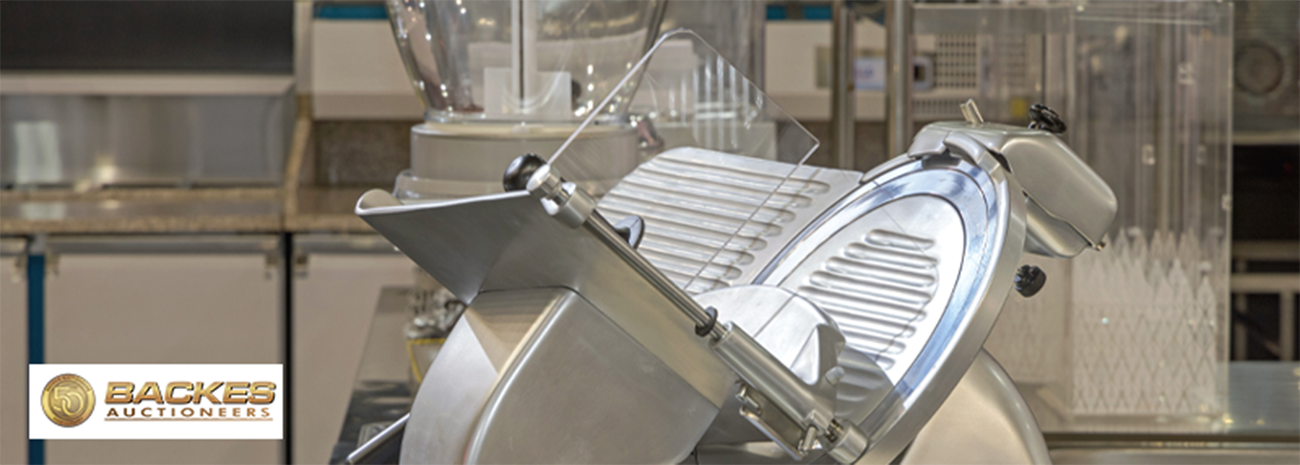
Many people associate food service auctions with ovens, fryers, and refrigeration. In practice, a commercial food service equipment auction can include everything from bakery mixers and dough-processing systems to slicers, grinders, beverage equipment, packaging machines, and production support assets.
Specialized food service equipment sold at auction may include commercial mixers, meat slicers, food-processing machinery, bakery equipment, refrigeration, beverage systems, packaging equipment, and stainless production assets. Inventory varies by auction and may come from restaurants, bakeries, institutions, grocery operations, caterers, and food manufacturers.
Quick Navigation
- What Food Service Equipment Can Be Sold at Auction?
- Commercial Mixers and Dough-Preparation Equipment
- Slicers, Grinders, and Food-Processing Equipment
- Bakery and Specialty Production Equipment
- Beverage, Coffee, and Frozen-Treat Equipment
- Refrigeration, Storage, and Production Support
- Who Buys Specialized Food Service Equipment?
- What Buyers Need to Know Before They Bid
- When Should Food Service Equipment Be Sold at Auction?
- Preparing Specialized Food Service Equipment for Auction
- Turn Specialized Food Service Assets Into an Organized Auction Offering
- Frequently Asked Questions
What Food Service Equipment Can Be Sold at Auction?
Food service auctions may include mixers, slicers, grinders, bakery equipment, food-processing machines, refrigeration systems, beverage equipment, packaging machinery, stainless workstations, and storage assets. Available inventory depends on the operation and the circumstances behind the sale.
At Backes Auctioneers, we handle equipment from restaurants, bakeries, schools, hospitals, hotels, grocery stores, catering businesses, production kitchens, and concession operations. Some projects involve a few surplus assets, while others are complete commercial kitchen liquidation or food service equipment liquidation events.
Commercial Mixers and Dough-Preparation Equipment
Mixing and dough-production equipment is common in bakeries, pizza operations, commissaries, and institutional kitchens.
Examples include:
- Planetary mixers
- Spiral mixers
- Floor mixers
- Countertop mixers
- Dough sheeters
- Dough rollers
- Dough dividers
- Proofing cabinets
- Bread slicers
Buyers searching for commercial mixers for sale often focus on bowl capacity, included attachments, electrical requirements, and overall operating condition. These details help determine whether a machine fits a buyer's production needs.
Slicers, Grinders, and Food-Processing Equipment
A food processing equipment auction may include equipment used for preparation, portioning, and production.
Common examples include:
- Commercial meat slicers
- Meat grinders
- Food processors
- Bowl cutters
- Patty-forming machines
- Vegetable cutters
- Dicers
- Choppers
- Tenderizers
- Vacuum packaging equipment
These assets are often used by delis, butcher shops, commissary kitchens, grocery operations, and food manufacturers. Buyers on the market for these assets typically look closely at capacity, condition, safety features, and included accessories.
Bakery and Specialty Production Equipment
Bakery operations often rely on equipment that differs from a standard restaurant kitchen.
Examples may include:
- Deck ovens
- Rack ovens
- Convection ovens
- Donut equipment
- Depositors
- Proofers
- Glazing equipment
- Cooling racks
- Confectionery equipment
- Production tables and carts
Not every bakery equipment auction contains all these asset types, but they represent the range of equipment that may become available through remodels, relocations, upgrades, or business closures.
For more industry insight, visit our food service auction resources.
Beverage, Coffee, and Frozen-Treat Equipment
Specialty beverage equipment can range from simple brewing systems to specialized machines with complex utility and maintenance requirements.
Examples include:
- Commercial espresso machines
- Coffee brewers and grinders
- Beverage dispensers
- Post-mix systems
- Ice machines
- Slush machines
- Soft-serve machines
- Frozen beverage equipment
- Juicers
When evaluating these assets, buyers often review utility requirements, accessories, service history, and available documentation.
Refrigeration, Storage, and Production Support
Food production depends on more than cooking and preparation equipment.
Assets frequently sold as part of a used restaurant equipment auction include:
- Walk-in coolers and freezers
- Reach-in refrigeration
- Refrigerated prep tables
- Blast chillers
- Stainless worktables
- Sinks
- Shelving
- Ingredient bins
- Mobile racks
- Holding cabinets
- Carts
These supporting assets often represent an important part of a facility's overall equipment inventory. Interested buyers can monitor our upcoming food service equipment auctions.
Who Buys Specialized Food Service Equipment?
Buyers may include restaurants, bakeries, cafés, caterers, schools, healthcare facilities, grocery operators, food manufacturers, startups, concessionaires, and equipment dealers.
Buyer interest varies by equipment type, age, condition, and intended use. A specialized bakery machine may appeal to a different audience than a prep table or refrigeration unit. Through online bidding and Midwest marketing efforts, we often connect equipment with buyers across multiple sectors.
What Buyers Need to Know Before They Bid
Before participating in a restaurant equipment auction, buyers should review:
- Manufacturer and model information
- Dimensions and capacity
- Utility requirements
- Condition
- Included attachments
- Maintenance records
- Photos
- Inspection opportunities
- Removal responsibilities
Accurate information helps buyers determine whether equipment is suitable for their operation and facility.
When Should Food Service Equipment Be Sold at Auction?
Food service equipment is commonly sold when businesses:
- Close operations
- Relocate facilities
- Remodel kitchens
- Upgrade equipment
- Change production methods
- Renovate institutional kitchens
- Manage surplus assets
- Conduct a complete liquidation
Organizations exploring options can learn more about our commercial kitchen liquidation services.
Preparing Specialized Food Service Equipment for Auction
Sellers should gather equipment specifications, operating information, maintenance records, and site access details before the auction begins.
Documentation Checklist
- Manufacturer
- Model and serial number
- Age
- Dimensions
- Capacity
- Electrical or gas requirements
- Refrigerant information
- Included attachments
- Operating condition
- Maintenance history
- Whether the equipment is currently connected
- Removal or access considerations
It also helps to organize accessories, identify disconnection requirements, and ensure equipment is reasonably clean and accessible.
Turn Specialized Food Service Assets Into an Organized Auction Offering
From bakery mixers and slicers to refrigeration systems and production equipment, food service facilities often contain assets that require specialized knowledge to market and sell effectively.
At Backes Auctioneers, we help owners, lenders, trustees, institutions, and business operators organize equipment, document assets, and prepare auction offerings that fit their circumstances. To discuss a restaurant equipment auction, learn more about our commercial auction services, book your own auction, or contact our team.
Frequently Asked Questions
What types of food service equipment can be sold at auction?
Food service auctions may include mixers, slicers, grinders, ovens, refrigeration systems, beverage equipment, food-processing machinery, packaging equipment, stainless workstations, and storage assets. Inventory varies depending on the operation and equipment available for sale.
Can bakery and food-processing equipment be sold at auction?
Yes. Commercial auctions frequently include bakery and food-processing equipment such as mixers, proofers, ovens, depositors, packaging systems, grinders, and production equipment. The exact inventory depends on the facility and auction circumstances.
Who buys used commercial kitchen equipment?
Buyers may include restaurants, bakeries, cafés, caterers, schools, healthcare facilities, grocery stores, food manufacturers, startups, concession businesses, and equipment dealers. Demand differs by equipment category and operational needs.
What information should I provide before selling restaurant equipment?
Provide manufacturer details, model and serial numbers, dimensions, capacity, utility requirements, condition information, maintenance history, available accessories, and photographs. Access and removal details are also helpful to prospective buyers.
Can an entire restaurant or commercial kitchen be liquidated at auction?
Yes. Auctions can be structured around a complete restaurant, bakery, food production facility, or institutional kitchen. Depending on the situation, assets may be sold as individual lots or as part of a larger liquidation effort.

0 comments