


Fabrication Auctions: Beyond Welders and Steelworking Tools
Posted On: November 2, 2026 by Backes Auctioneers in: Fabrication
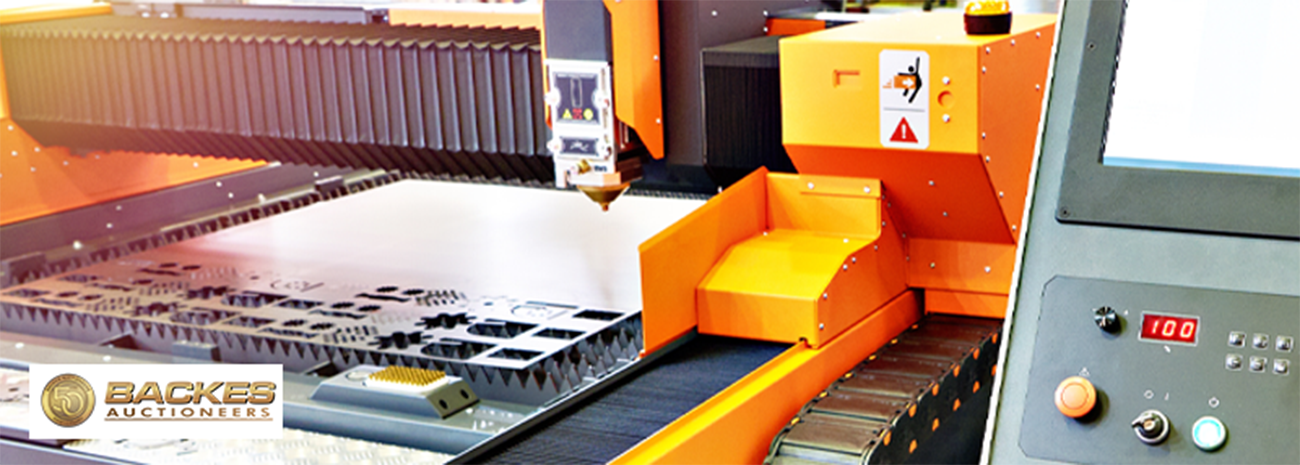
Many people picture fabrication equipment auctions as rows of welders, workbenches, and hand tools. Those assets may be part of the sale, but a fabrication facility often includes far more specialized equipment. Cutting systems, CNC machinery, robotic welding cells, material-handling assets, tooling, and support infrastructure can all be part of a complete liquidation.
Fabrication auctions can include CNC plasma tables, laser cutters, waterjets, press brakes, machining centers, robotic welding cells, forklifts, cranes, inspection equipment, tooling, and other industrial fabrication equipment. Complete shop liquidations may extend well beyond production machinery to include support equipment and material storage systems.
For owners, lenders, attorneys, trustees, and buyers, understanding the full range of assets is important because specialized equipment requires accurate documentation and targeted marketing.
Quick Navigation
- What Equipment Is Sold at a Fabrication Auction?
- Cutting and Material Preparation Equipment
- Forming, Bending, and Shaping Machinery
- Machining and Finishing Equipment
- Welding Systems and Automated Fabrication Equipment
- Tooling, Inspection, and Shop Support Assets
- Why Accurate Cataloging Matters for Specialized Machinery
- When Should a Fabrication Business Consider an Auction?
- Preparing Fabrication Equipment for Auction
- Put Specialized Fabrication Equipment in Front of the Right Buyers
- FAQs
What Equipment Is Sold at a Fabrication Auction?
A fabrication equipment auction can include nearly every category of equipment found in a metal fabrication or machine shop. Depending on the operation, a used fabrication equipment auction may feature cutting systems, forming equipment, machining centers, welding systems, forklifts, cranes, inspection tools, and substantial inventories of tooling.
Some sales focus on a few surplus machines. Others involve complete facility liquidations that encompass production machinery, maintenance equipment, office contents, and shop infrastructure.
At Backes Auctioneers, we frequently work with assets that require detailed specifications and industry knowledge so buyers can accurately evaluate their capabilities.
Cutting and Material Preparation Equipment
The cutting department often contains some of the most specialized assets in the shop.
Common examples include:
- CNC plasma tables
- Fiber laser cutting systems
- Waterjet cutters
- Metal saws
- Shears
- Ironworkers
- Tube and pipe cutting equipment
- Material-feed systems
Each type of cutting machine is designed for specific fabrication tasks. Plasma systems are widely used for cutting conductive metals. Laser cutters provide precision and speed. Waterjets can process a broad range of materials while limiting heat-related distortion.
Buyers reviewing a CNC equipment auction or sheet metal equipment auction often want details such as table size, cutting capacity, control systems, software, and included accessories. Those details help determine whether a machine fits a specific operation.
Forming, Bending, and Shaping Machinery
Many fabrication shops rely on equipment that bends, forms, punches, or shapes metal after cutting.
Examples include:
- Press brakes
- Plate rolls
- Angle rolls
- Tube and pipe benders
- Punch presses
- Hydraulic presses
- Roll formers
- Notching equipment
Capacity matters in this category. A buyer searching the Midwest for a fabrication equipment auction may be looking for a very specific tonnage, bending length, rolling capacity, or tooling package. Clear descriptions make it easier for qualified buyers to identify equipment that meets those requirements.
Machining and Finishing Equipment
Fabrication shops often perform machining and finishing work in-house, creating another category of assets that may appear at auction.
Examples include:
- CNC machining centers
- Mills
- Lathes
- Grinders
- Deburring equipment
- Sanders
- Blast cabinets
- Finishing and polishing systems
Not every auction includes machining equipment, but it frequently appears when facilities are downsizing, consolidating operations, or closing entirely. This presents buyers with a unique opportunity and sellers with the potential for larger ROI.
Important specifications may include travel dimensions, spindle capacity, control systems, operating hours, and tooling packages. Accurate information helps buyers assess equipment before bidding.
Welding Systems and Automated Fabrication Equipment
A welding equipment auction may involve much more than portable welders.
Fabrication facilities may include:
- Multi-process welding systems
- Robotic welding cells
- Welding positioners
- Manipulators
- Fixture tables
- Fume extraction systems
- Specialty welding equipment
Robotic welding systems illustrate why specialized equipment knowledge matters. Buyers often want information about the robot manufacturer, controller generation, fixtures, software, safety components, and weld-process capabilities.
Support equipment deserves attention as well. Fume extraction and related systems can be valuable assets when properly documented and marketed.
Tooling, Inspection, and Shop Support Assets
Some of the most overlooked assets in a fabrication facility are the components that keep production moving.
These may include:
- Dies and die sets
- Fixtures and jigs
- Machine tooling
- Measuring equipment
- Quality control instruments
- Air compressors
- Dust and fume collection systems
- Overhead cranes
- Hoists
- Forklifts
- Racking
- Workbenches
- Raw-material storage systems
For many buyers, these assets are essential. A machine may draw attention, but the tooling, fixtures, and support equipment that accompany it can have a major impact on usability.
Why Accurate Cataloging Matters for Specialized Machinery
Specialized fabrication equipment requires more than a brief equipment label.
Buyers commonly need information about:
- Capacity
- Bed or table size
- Controls and software
- Voltage requirements
- Hours of operation
- Tooling packages
- Included accessories
- Maintenance history
- Operating condition
- Rigging or removal considerations
The information required to evaluate a robotic welding cell differs from what buyers need to assess a hydraulic press or machining center.
At Backes Auctioneers, we work to identify important specifications, organize equipment details, and present assets in a way that helps qualified buyers understand what is available. Good documentation supports transparency and allows sellers to present equipment professionally.
For additional insights, browse our collection of fabrication auction articles.
When Should a Fabrication Business Consider an Auction?
A fabrication business may consider an auction when closing a facility, retiring, relocating, upgrading equipment, consolidating operations, reducing excess capacity, or disposing of surplus machinery. Auctions are also commonly used when lenders, attorneys, trustees, or financial institutions need an organized asset-disposition process.
Situations that often lead to an auction include:
- Business closure
- Retirement
- Relocation
- Equipment upgrades
- Production changes
- Surplus machinery
- Consolidation efforts
- Lender-directed disposition
- Restructuring proceedings
Businesses that need to sell fabrication equipment can learn more about options to sell commercial machinery and equipment. Buyers can also view upcoming equipment auctions.
Preparing Fabrication Equipment for Auction
Preparation begins with gathering accurate equipment information.
Before a fabrication equipment auction, collect:
- Manufacturer
- Model number
- Serial number
- Equipment age
- Capacity specifications
- Power requirements
- Tooling and accessories
- Maintenance records
- Operating condition
- Photos or videos showing operation
Those details help create stronger equipment listings and provide buyers with a clearer understanding of the assets being offered. Additional guidance can be found in our fabrication-focused resources.
Put Specialized Fabrication Equipment in Front of the Right Buyers
Fabrication facilities often contain a wide mix of assets, from laser cutters and press brakes to robotic welding systems, machining centers, forklifts, and tooling inventories.
Marketing those assets effectively starts with understanding what equipment is available and documenting it accurately. Buyers need meaningful specifications, not just equipment names.
Whether you are planning a facility closure, replacing machinery, handling lender-directed assets, or evaluating an industrial equipment liquidation, our team can help assess equipment, organize inventories, and discuss auction options. Learn more about our commercial auction services or discuss an industrial equipment auction.
FAQs
What types of fabrication equipment can be sold at auction?
Fabrication auctions can include CNC cutting systems, press brakes, machining centers, welders, robotic welding cells, forklifts, compressors, tooling, inspection equipment, cranes, and other support assets. Some sales feature individual machines, while others include complete facility liquidations.
Can a complete fabrication shop be liquidated through one auction?
Yes. A single auction can include production machinery, tooling, support equipment, material-handling assets, inventory, and office contents. The specific scope depends on the seller's goals and the assets being sold.
How is used fabrication equipment evaluated before an auction?
Equipment is typically identified, photographed, documented, and cataloged. Information such as model numbers, capacities, condition, tooling, and operational status helps create accurate listings for prospective buyers.
What records should I provide when selling fabrication machinery?
Useful records include maintenance logs, service history, equipment manuals, purchase documents, tooling inventories, and operating specifications. Photos and videos can also help document condition and operation.
Can buyers bid online in a fabrication equipment auction?
Yes. Many fabrication auctions include online bidding, allowing buyers from Iowa, the Midwest, and other markets to participate remotely. Available bidding options depend on the specific sale format.

0 comments